

There’s something magical about seeing the Gulf Coast from way up high. While beachgoers get glimpses of marine life from the shore, the view from hundreds of feet in the air reveals an entirely different world. The crystal clear emerald waters suddenly become transparent, showing off schools of fish, gliding rays, and pods of dolphins that you’d never spot from the sand.
Why Height Changes Everything
From up above, the Gulf transforms into a living map. You can see how the turquoise shallows give way to deeper navy blues. Dark shadows moving across the sandy bottom? Those are stingrays. That silvery cloud shifting through the water? A massive school of fish. And if you’re lucky, you’ll catch dolphins hunting together near the coastline.
What’s really cool is how everything connects. The sandbars, channels, and barrier islands all work together to create habitats. From this perspective, you get why certain spots are packed with marine life while others look empty. It’s like getting the cheat code to understanding the Gulf.
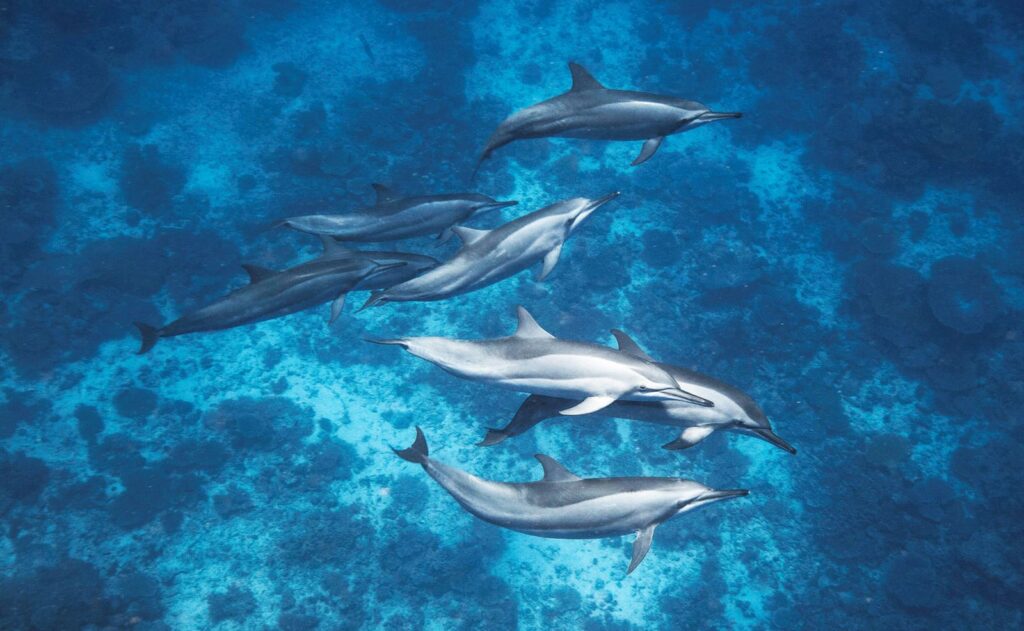
Dolphins Stealing the Show
Atlantic bottlenose dolphins are hands down the most popular residents out here. Watching them from above is completely different than spotting them from a boat. You can actually see their hunting strategies play out in real time.
They’ll herd schools of mullet into shallow water, creating what looks like a dark, swirling tornado beneath the surface. The dolphins take turns charging through, and you can see silver flashes as the panicked fish jump. It’s coordinated, impressive, and honestly pretty smart.
Summer is when you might spot mother dolphins teaching their calves. The babies stick close to mom, practicing the moves they’ll need to survive. These little teaching moments happen every day in the Gulf, but most people never get to witness them like this.
Sea Turtles Taking It Slow
Five different sea turtle species call the Gulf home: loggerheads, greens, Kemp’s ridley, hawksbills, and leatherbacks. From above, they look like dark shapes gliding just under the surface, moving their flippers in slow motion.
Loggerheads are your best bet for spotting, especially between May and October when they nest. The females swim along the shore looking for the perfect beach to lay eggs, often returning to the same stretch where they were born decades ago.
Green sea turtles can weigh over 300 pounds and love munching on seagrass beds. From way up high, you can spot these underwater gardens as darker patches on the sandy bottom. Watch long enough and you’ll see the turtles pop their heads up for air.
If you see a Kemp’s ridley, consider yourself lucky. They’re the smallest sea turtles and endangered, though they’ve made an amazing comeback since the 1980s.
Stingrays Putting On a Show
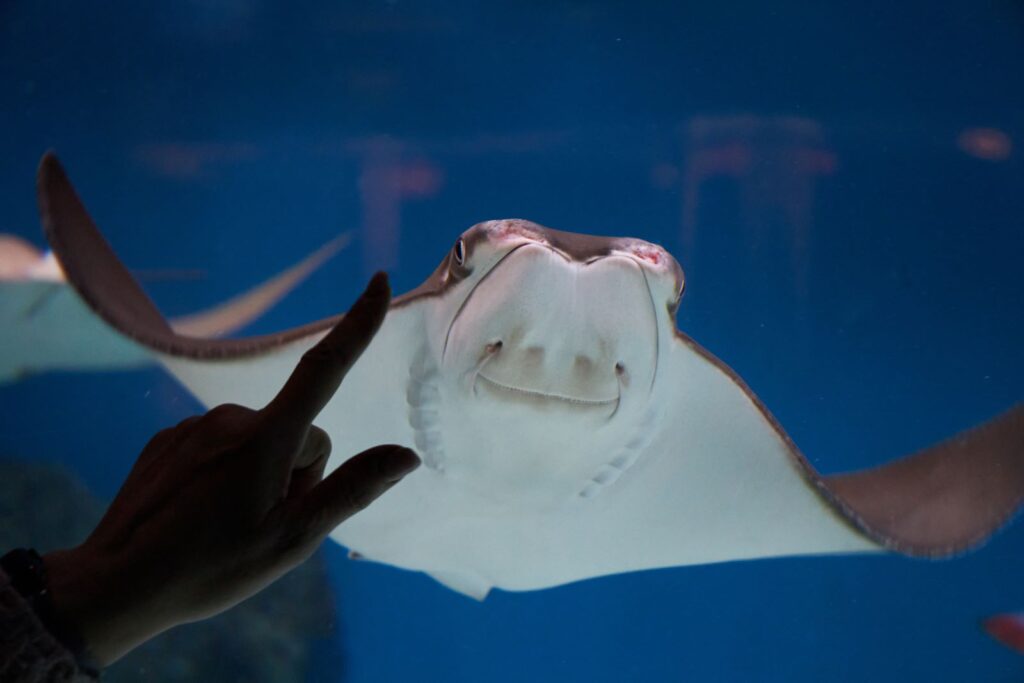
Ever seen a group of stingrays cruising together? From above, they look like dark diamonds floating just above the seafloor, their fins rippling like underwater wings. It’s hypnotic.
Southern stingrays love hanging out in shallow areas, especially in spring and summer when they’re looking for mates. Sometimes dozens gather in one spot, and their synchronized swimming looks straight out of a nature documentary.
Spotted eagle rays are the rare treat. They’ve got distinctive white spots and actually swim like they’re flying. Sometimes they’ll leap completely out of the water. Catch one doing that and you’ve got yourself a vacation story.
The Baitfish Highway
The Gulf is packed with schools of mullet, menhaden, and other small fish. These guys are the foundation of everything. From above, they look like dark clouds moving through the water, sometimes stretching as far as you can see.
What’s wild is watching them move together like one giant organism. They expand, contract, and dart as a unit. It’s a defense mechanism that usually works, but when predators like tarpon or jacks attack, the school explodes like an underwater firework. Fish scatter everywhere, then regroup seconds later.
Keep an eye out for cobia too. These big brown fish cruise alone or in pairs near the surface and can grow up to six feet long.
Sharks (Don’t Worry)
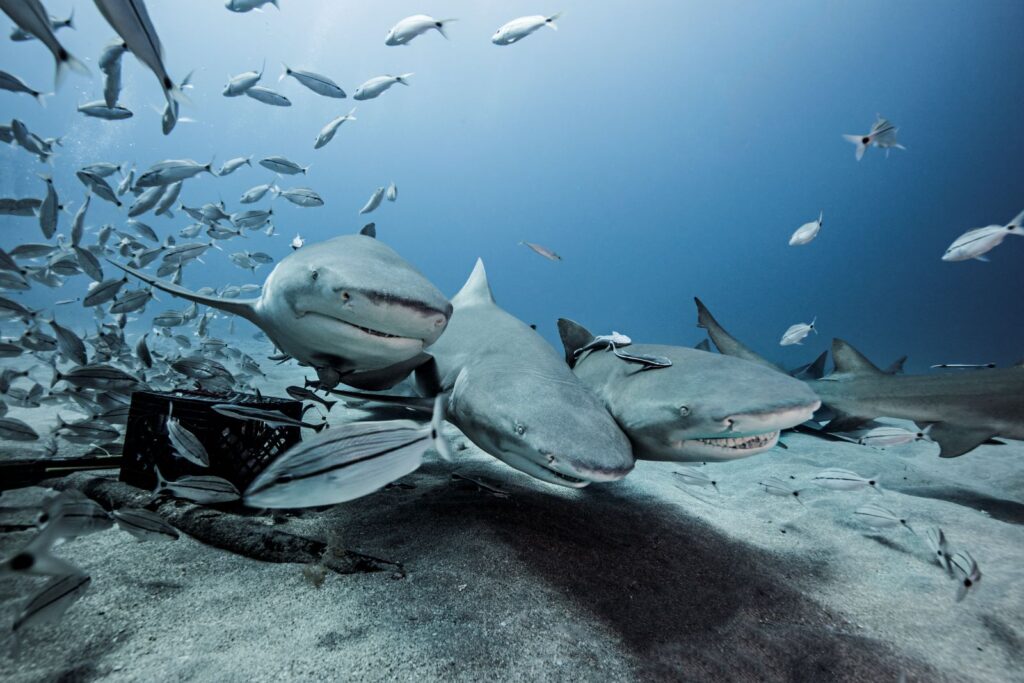
Yeah, there are sharks out here, but they’re not what you think. Most of the sharks in the Gulf are harmless and actually keep the ecosystem healthy. From up high, you can watch them hunt without any of the beach level panic.
Blacktip sharks are the most common, especially in spring and fall. They’re only 4 to 6 feet long and love chasing baitfish in shallow water. Their speed is incredible to watch from above.
Bull sharks pop up occasionally in coastal areas. They’re stockier than blacktips and have blunt snouts that make them easy to identify.
Hammerheads are the coolest looking by far. Even from hundreds of feet up, that unique head shape is unmistakable. Watching them sweep their heads side to side while hunting is something special.
When to Go
Timing matters if you want to see specific creatures.
Spring brings tarpon migration and the start of sea turtle nesting in May. Cobia swim near the surface in pairs during this time.
Summer has the most variety. Baitfish schools peak, jellyfish bloom, and dolphin moms teach their calves. The water’s warm and clear.
Fall is shark season. Blacktips migrate south along the coast, and bull redfish gather near inlets.
Winter stays active despite cooler temps. Dolphins seem extra playful, and rays stick around in the shallows.
Reading the Water
Once you start watching from above, you’ll learn to read the Gulf like a local. Birds diving? There’s feeding happening below. Dark shadows moving fast? Predators on the hunt. Water changing colors? That’s where the depth shifts and different habitats meet.
Sandbars and channels act like highways for marine life. Dolphins, rays, and fish use them regularly. Seagrass beds are nurseries for baby fish and restaurants for sea turtles. It all makes sense when you can see the big picture.
On calm, clear days, you can see thirty feet down to the seafloor. Individual fish, boat shadows, swimmer trails. Everything becomes visible.
Why This Matters
Seeing the Gulf from this perspective usually changes people. When you witness how complex and beautiful this ecosystem is, protecting it stops being abstract. It becomes personal.
You might see dolphins working around fishing nets or sea turtles searching for nesting beaches on developed coastlines. Maybe you’ll spot plastic drifting among the jellyfish. These aren’t just statistics anymore. They’re real problems affecting the incredible wildlife you’re watching.
The good news? Small changes help. Using less plastic, choosing sustainable seafood, supporting coastal protection. It all matters more when you’ve seen what’s at stake.
Making the Most of Your Time
A few tips for the best wildlife viewing:
Pick calm, sunny days with light wind. Morning usually offers the calmest water and most active animals.
Know what you’re looking for before you go up. Dark shadows on light sand are usually rays or sharks. Sleek shapes that keep surfacing are probably dolphins.
Watch for clues. Diving birds mean feeding below. Disturbed water means predator activity. Different water colors show depth changes.
Be patient. Pick one area and watch it instead of scanning frantically. Movement catches your eye naturally.
The View That Changes Everything
There’s something about seeing the Gulf from hundreds of feet up that shifts how you think about it. What looked like empty water from the beach is actually teeming with life. Every seagrass patch, sandbar, and channel has a purpose.
Whether you’re watching dolphins teach their young, rays gliding gracefully, or just soaking in the clarity of the water, this perspective offers genuine wonder. It’s rare to experience that these days.
Parasailing in Destin gives you this exact vantage point. The height, the duration, the peaceful ride. It’s the perfect setup for meaningful wildlife watching that you just can’t get from the beach or a boat.
Next time you visit the Gulf Coast, look beyond the shoreline. The real magic isn’t just the white sand and emerald water. It’s the thriving ecosystem that reveals itself when you see the Gulf like dolphins and sea turtles do: from above.
Once you’ve experienced the Gulf’s hidden world from up there, the ocean never looks the same again. You’ll go from casual beach visitor to someone who truly understands one of nature’s most spectacular marine environments. And that’s a pretty cool souvenir to take home.